Case Study:
NJICS
New Jersey Institute for Community Schools
Foundational Brand & Communication Infrastructure
The Challenge
As a newly established state institute, NJICS lacked a centralized digital identity and a formalized method for stakeholder engagement. To fulfill its mission of supporting community school initiatives across New Jersey, the organization required a "zero-to-one" infrastructure launch. The primary obstacles included:
- Information Fragmentation: Vital institute insights and legislative updates existed in silos without a public-facing "source of truth."
- Engagement Gaps: No recurring mechanism existed to keep state-wide stakeholders (educators, policymakers, and community leaders) aligned with the institute’s progress.
- Resource Accessibility: High-value research and guidance documents needed a secure, professional dissemination pipeline that didn't rely on complex web architecture.
- Brand Ambiguity: As a new entity, the institute needed a visual and narrative identity that communicated professional authority and community-centric values.
The Solution
I designed and deployed a "lean infrastructure" toolkit to serve as the institute’s primary engagement engine. By prioritizing identity architecture and communication funnels, I ensured immediate institutional credibility:
IDENTITY ARCHITECTURE
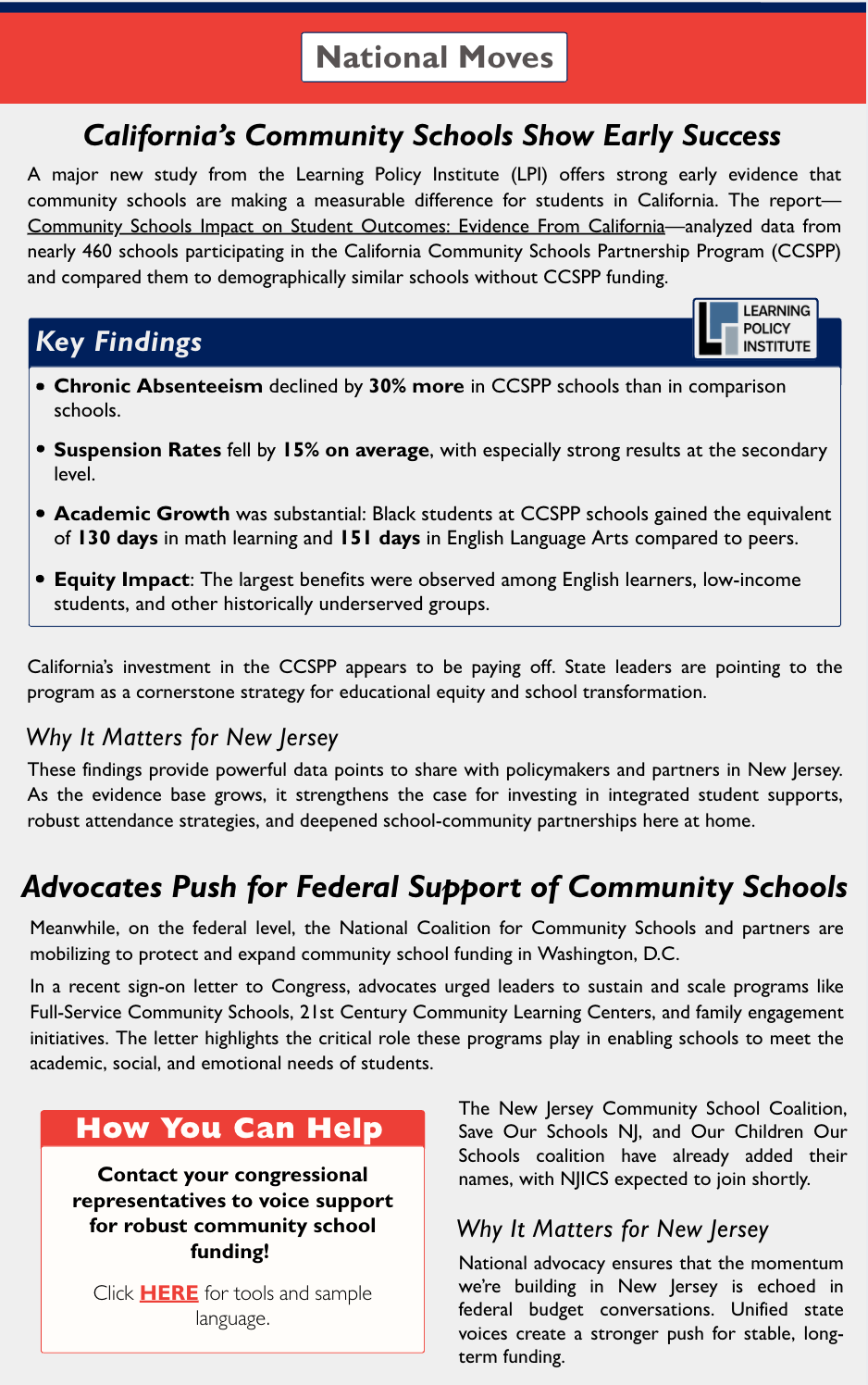
Developed a cohesive visual language and narrative tone that balanced policy authority with community accessibility. This included establishing the visual "look and feel" for the inaugural digital presence.
MODULAR COMMUNICATION SYSTEMS
Engineered the "NJICS Newsletter" from the ground up. I designed reusable templates for recurring content pillars, such as "Mapping Momentum" and "NJ Happenings," ensuring a consistent brand experience across all distributions.

STRATEGIC NARRATIVE TRANSLATION
Acted as a strategic partner to shape the outreach strategy, synthesizing dense institute research into accessible, high-impact narratives for diverse stakeholder groups.
The Impact
The implementation of this digital infrastructure transformed NJICS from an internal concept into a visible, authoritative state resource:
SUSTAINABLE HAND-OFF
By building modular, template-based systems, I provided the institute with a sustainable framework they can maintain with minimal technical overhead as their mission expands.
INSTITUTIONAL CREDIBILITY
Neutralized 'new entity' ambiguity by delivering a polished, professional brand presence that allowed the Institute to participate in high-level policy discussions with immediate visual and narrative authority.
EFFICIENT KNOWLEDGE FLOW
Established a direct "Resource-to-Stakeholder" pipeline, ensuring that critical policy and educational documents were distributed and tracked effectively.