Case Study:
SCCI
School Culture & Climate Initiative
Manuscript Governance & Global Editorial Operations
The Challenge
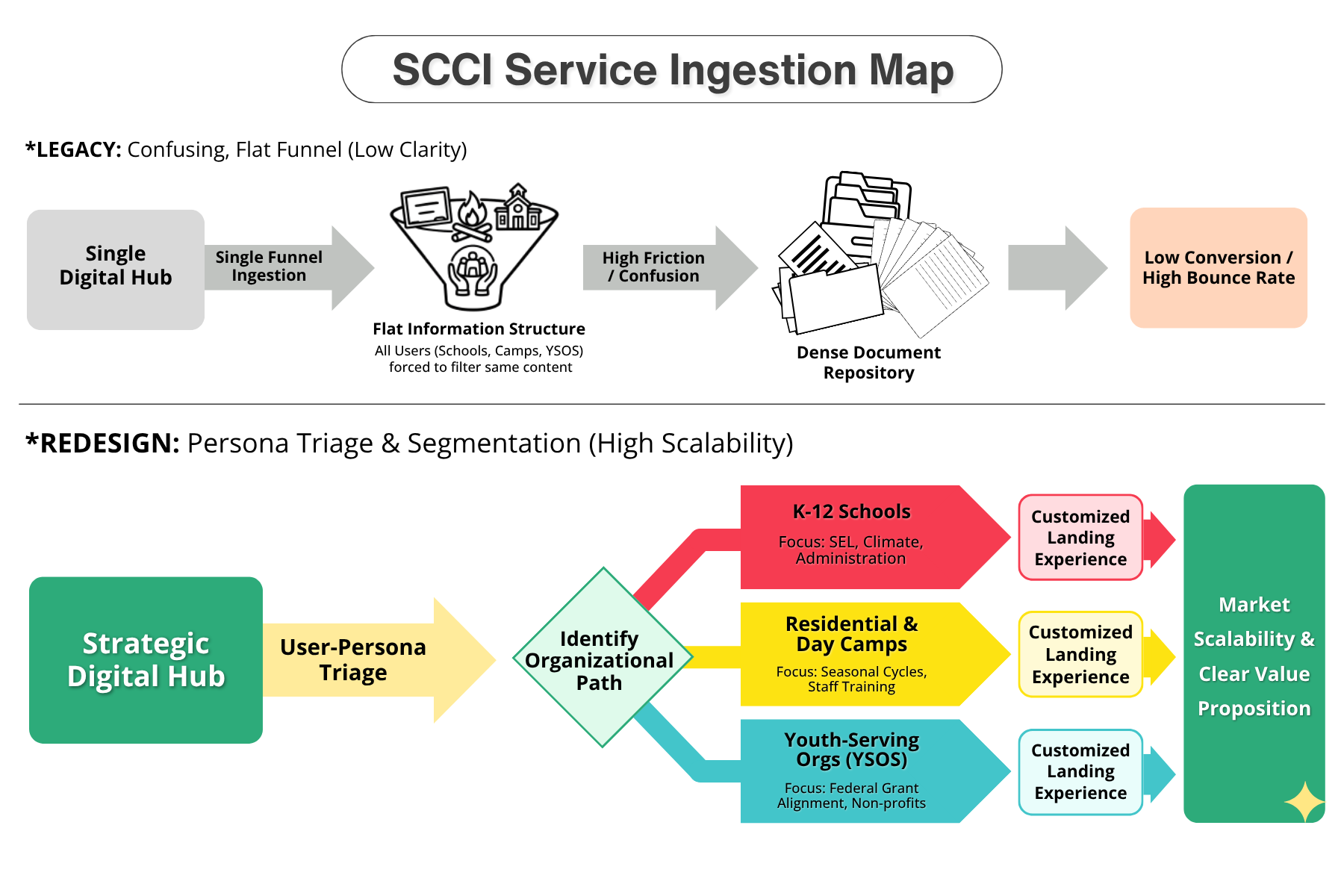
SCCI’s legacy digital presence featured a flat information structure that forced all users—regardless of their specific organizational needs—through the same dense funnel. This "one-size-fits-all" approach created high bounce rates and made it difficult for diverse stakeholders to understand the modularity of SCCI’s offerings, obscuring the specialized value provided to different sectors.
The Solution
I re-engineered SCCI’s digital architecture, transforming a generic information repository into a strategic diagnostic tool. By implementing a persona-based triage model, I shifted the organization from a static document funnel to a dynamic service-pathway model. This ensured that high-value stakeholders—from K-12 administrators to federal grant-seekers—could navigate to relevant modular services in under five seconds, simultaneously improving client retention and opening doors to new, grant-funded markets.
USER-PERSONA TRIAGE & MARKET SEGMENTATION
I redesigned the digital entry point to act as a diagnostic tool. By segmenting the audience into three distinct pathways, we ensured that users received the exact resources and service descriptions relevant to their unique institutional constraints.
- K-12 Schools: Optimized for educators and administrators focused on climate and SEL.
- Residential & Day Camps: Tailored for seasonal youth-development cycles.
- Youth-Serving Organizations (YSOs): A new, high-growth segment targeting community-based non-profits.
OPERATIONAL REDESIGN
(The Flywheel Model)
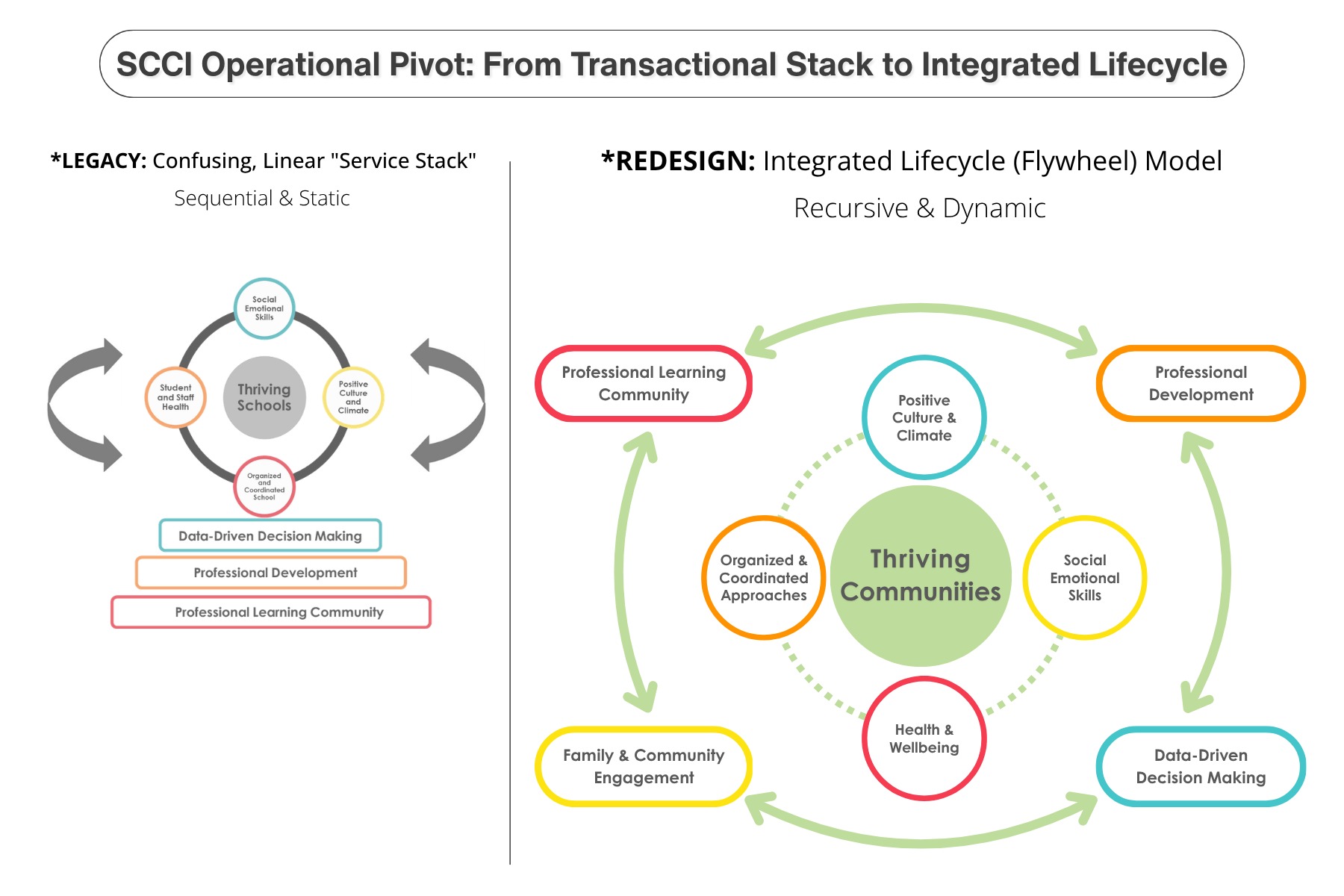
I pivoted SCCI's core operational framework from a linear "stack" of services to an Integrated Lifecycle (Flywheel) model. This redesign highlights the continuous feedback loops and iterative growth inherent in school climate work, rather than treating it as a one-off transaction.
CONTENT GOVERNANCE & BRAND MODERNIZATION
To support the new architecture, I performed a full content inventory and modernized the organizational copy. I translated complex pedagogical theories into high-impact, professional language to ensure brand consistency and "grant-readiness" for federal-level applications.
- Asset Audit: Streamlined the digital resource library, removing redundancies and tagging assets for easier cross-sector discovery
- Unified Voice: Established a "tone-of-voice" guide that balanced academic rigor with the practical, accessible energy required for youth-work professionals.
The Impact
USER CLARITY
Users can now self-identify their specific organizational path within 5 seconds of landing.
MARKET SCALABILITY
The new "YSO" category successfully positioned SCCI to target a multi-million dollar federal youth-development grant market.
INTERNAL ALIGNMENT
The Flywheel model provided a clear, unified framework for staff to explain the SCCI value proposition to external funders.